News in Professional Logistics
In 2025, the food and drink sector has confirmed its role as one of the pillars of the Spanish and European economy, showing moderately positive growth after several years marked by the pandemic, the energy crisis, and inflationary pressures. Although growth has been contained, the sector has demonstrated resilience in production, employment, and export activity.
According to data from the Ministry of Agriculture, Fisheries and Food (MAPA) and the National Statistics Institute (INE), the food and drink industry maintains its position as the country's leading manufacturing sector in terms of turnover. It represents approximately 2.3 % of national GDP and close to 26 % of the total manufacturing industry. The sector's global turnover exceeds 175,000 million euros, consolidating its structural weight in the Spanish economy.
In terms of production, after a complex 2023 marked by inflation and rising raw material costs, 2024 closed with slight real growth (around 0.7 %), a trend that has continued through 2025. This growth has been moderate but significant in the context of a European economic slowdown. The improvement has been supported by the stabilisation of energy and logistics costs, as well as the progressive recovery of domestic consumption.
In the workplace, the sector has maintained solid employment levels. According to Randstad Research, over 550,000 people work in food and beverages in Spain, representing more than 20 % of manufacturing employment. Although the pace of job creation has moderated compared to the post-pandemic recovery years, the sector maintains figures higher than those recorded before 2020, demonstrating structural stability.
In terms of foreign trade, 2025 has been characterised by strong export activity, albeit with certain constraints. Spanish agri-food exports continue to be strategic, particularly for products such as olive oil, wine, preserves, meat products and fruit and vegetables. However, trade tensions with the United States have generated uncertainty; the announcement of new tariffs led to an advance increase in exports to the US market in 2024, as a precautionary measure by exporting companies. This situation has led the sector to strengthen its market diversification strategy.
Internationally, reports from consultancies such as Mordor Intelligence indicate that the global food and beverage market is on a path of sustained growth, driven by urbanisation, product innovation, and changing consumer habits. Several trends are particularly noteworthy and are also reflected in Spain: growth in healthy and functional products, an increase in non-alcoholic or low-alcohol beverages, greater demand for sustainable products with transparent traceability, and an expansion of the online channel and digitalisation of the supply chain.
The main challenges facing the sector include: pressure on margins, resulting from increased labour, energy, and raw material costs; regulatory adaptation, particularly concerning environmental and food safety matters; geopolitical and trade tensions, which affect export planning; and the need for constant innovation, in both products and production processes.
In conclusion, the food and drinks sector in 2025 behaves like a mature yet dynamic industry, with moderate growth, job stability and a strong export orientation. Despite an uncertain international economic environment, it maintains a solid position thanks to its strategic nature, adaptability and the strength of structural demand for basic goods.
Logistics as a brand differentiator
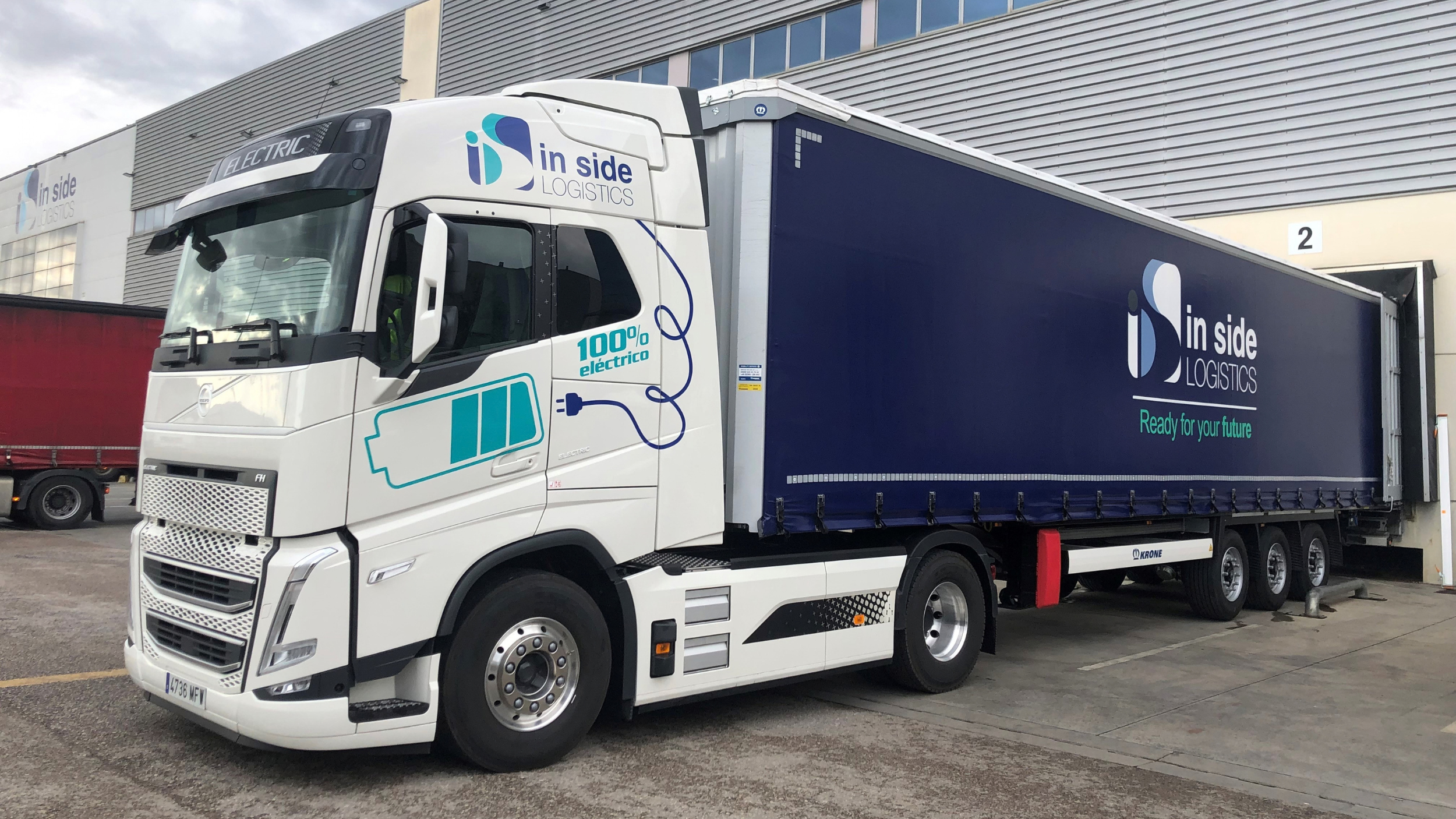
However, in this new competitive context, it is no longer enough to produce well: it is essential to guarantee an agile, efficient supply chain that is fully aligned with new market demands. And this is where logistics takes centre stage. In an environment marked by pressure on margins, order fragmentation, the rise of e-commerce The increasing demand for traceability and sustainability has transformed the supply chain from a mere operational support to a true brand differentiator.
Zebenzuy Taima, Managing Director In Side Logistics, Logistics is no longer a mere operational support but a brand differentiator,“ he says: ”Logistics is no longer a mere operational support but a brand differentiator. At least that is what we are seeing in recent years in the food and beverage sector, where global uncertainty, supply chain disruptions and rising costs have forced companies to rethink their structures from the ground up. And in this sector, the margins for error are particularly narrow. We are talking about perishable products, deadlines that do not allow for improvisation and consumers who, when something goes wrong, notice it immediately. That is why those who have invested in digitalisation, traceability, automation or in diversifying their suppliers have not only reduced risks, but have also gained something equally valuable: agility to react when things go wrong. In the end, well-functioning logistics is noticeable. It is noticeable in the customer's experience, it is noticeable in how they perceive a brand and, in short, it becomes one of the most important factors when it comes to competing".