

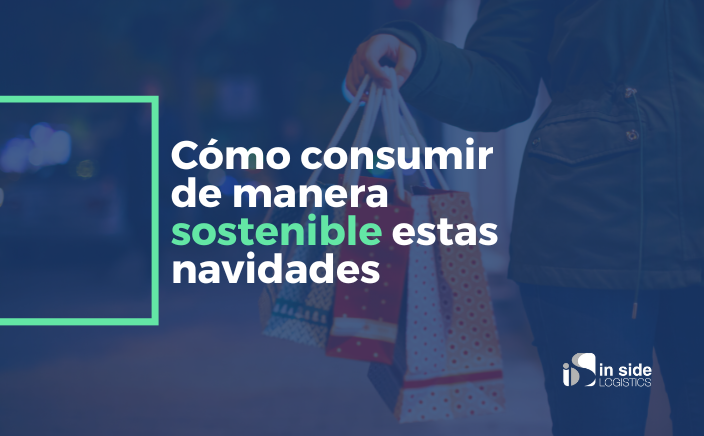
Knowing that Christmas is just around the corner makes people think of one thing: shopping. The arrival of the cold weather translates into a boom in sales due to sales seasons or festive dates.
In addition, December is one of the favourite months for Spanish citizens to consume. This is reflected in a study by Deloitte49% of respondents agree with this premise. Households are expected to spend an average of €634 this Christmas.
Although it is an advantage to make purchases at discount times, many of them do not cover any needs. The high consumption that happens in these cold months is not in line with current social objectives, which show concern for the environment and seek a reduction of the carbon footprint.
There is a growing awareness that many purchases are unnecessary. It is therefore essential that a sustainable mindset is incorporated in consumers, so that they do so in a responsible and conscious manner.
Organisations such as the European Union are already committed to responsible spending, which is visible in Sustainable Development Goal 12, oriented towards responsible production and consumption.
Reduce, reuse and recycle
One way to incorporate sustainability thinking is to keep in mind three axes on which environmentally responsible thinking is based.
Reducing, moving from compulsiveness to necessity; reusing products that can be given a second life and recycling materials to create new ideas are some of the ways to deal with this Christmas in a conscious way.
The bombardment of companies, encouraging reckless shopping, makes us lose sight of the purpose for which moments such as Christmas are celebrated. Sustainable consumption is possible by focusing on the objectives of the purchases.
What do I need, how useful is it, and will it last in the future? These are some of the questions that should be asked before making any purchase. Given that most of the time what is rewarded is the detail and not the good, investing in services instead of products can be a good way to reduce consumption. Experiences, leisure, art, are some of the aspects with which an equally satisfying experience can be achieved.
Second-hand trade is another good option, allowing you to obtain high quality, original and less polluting products at a good price and promoting a local economy.
With some of these facts in mind, one of the factors that really makes a difference in the fight to protect the environment comes into play in this picture.
Rewarding sustainability
It is essential, in the situation in which we currently find ourselves, to commit to conscientious companies that are trying to take the step towards a green future. When we focus on the logistics and transport sector, we see that it is one of the most polluting industries. That companies in this field show concern and manage to adapt to new realities marks a differential value.
Investing in entities that think sustainably generates a direct change in the carbon footprint. It is true that the impact of a product decreases if it is bought second-hand, but if the company that distributes it has incorporated sustainable forms of transport such as electric vehicles, it is much lower.
Making the move towards sustainability is possible and necessary. By incorporating targeted strategies, such as the Sustainability Reports and various target markers, which make the difference between a socially aware business and one that is not yet adapted to social needs.
The time to be aware of the footprint generated on the planet is now. Incorporating this mentality into actions and purchases is the first act in making society more committed to the goals of caring for and respecting the environment.


